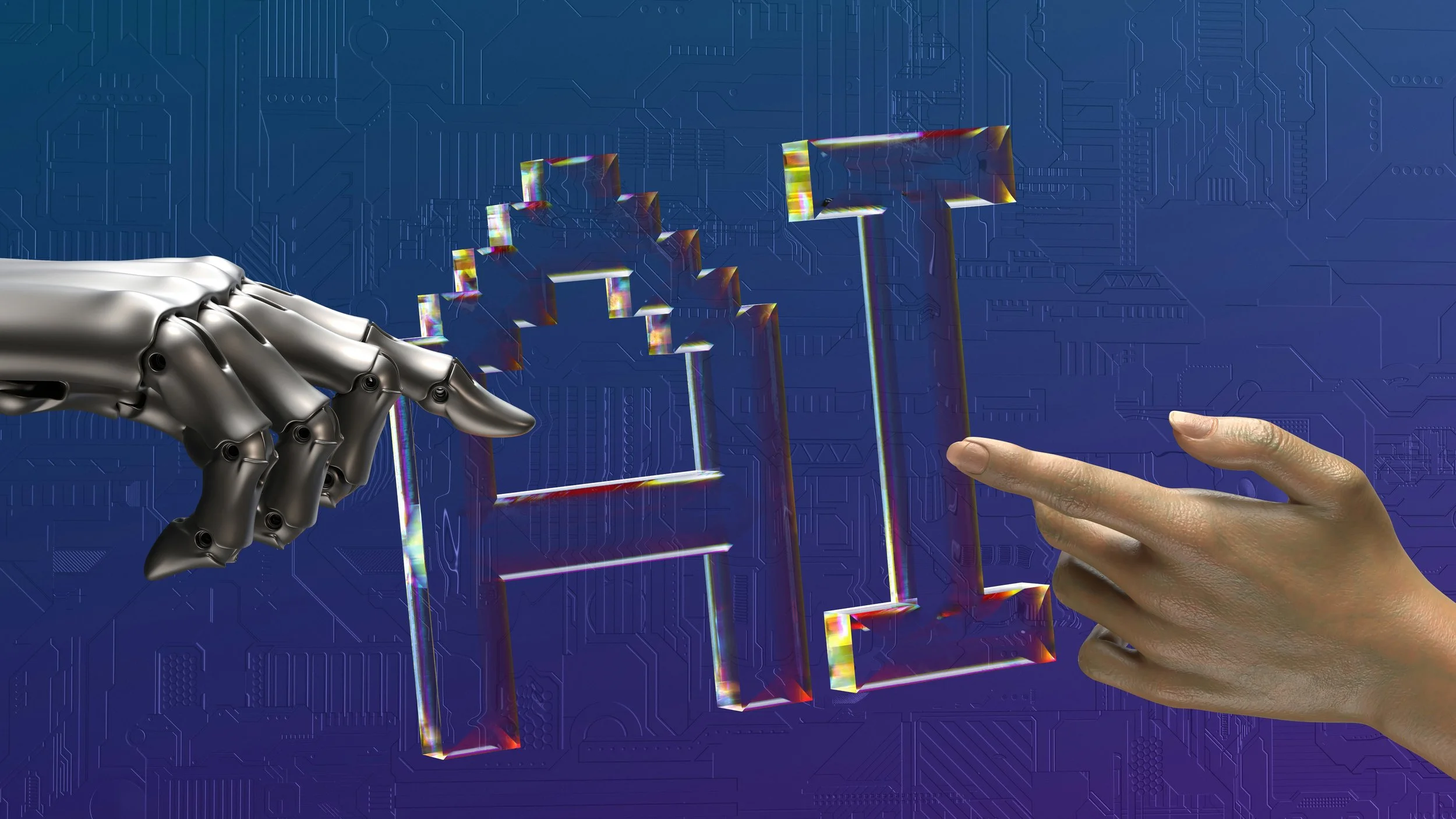
Image: Unsplash
In a world swamped with data, algorithms, and machine-generated insights, companies are investing heavily in AI — and for good reason. AI can speed up analysis, uncover patterns, automate repetitive work, and free human time for higher-value problems.
But as leading organisations are discovering, data alone is not enough. What’s becoming far more valuable — especially as AI grows more powerful — is discernment, emotional intelligence, and the capacity for wise judgment.
That’s why a growing number of top companies are pairing their AI investment with a quiet, deeper focus: the inner development of their leaders.
AI gives you information. Leadership demands wisdom.
AI can deliver endless dashboards, predictions, forecasts, and scenarios. It can flag opportunities, model risk, and even draft strategies.
But AI cannot pause.
It cannot sense tone.
It cannot weigh moral complexity.
It cannot anchor a team during uncertainty.
It cannot build trust.
These are human tasks — and they’re becoming more essential, not less.
Many senior leaders now describe practices like mindfulness, reflection, and deliberate stillness as their most reliable tools for:
Seeing through noise
Distinguishing urgent from important
Making steady, values-aligned decisions
Holding emotional space for teams during rapid change
Leading without being swept into the chaos of information overload
Inner stillness is becoming a strategic advantage.
What top companies are doing differently
Leading organisations aren’t just rolling out AI platforms — they’re reshaping leadership around a dual investment:
1. Transforming the technical stack (AI adoption).
They’re integrating AI into operations, decision-making, customer insight, and productivity systems.
2. Transforming the human stack (emotional capacity).
They’re developing leaders who:
practise mindfulness and reflection
maintain calm under pressure
communicate with emotional intelligence
lead with empathy and moral clarity
build psychologically safe, high-trust cultures
Because while AI handles data at scale, humans still handle meaning, ethics, culture, and direction.
The companies struggling most with AI are not the ones lacking tools — but the ones lacking the human leadership required to wield those tools effectively.
The real leadership skill for the AI era: inner clarity
If AI is the tool, inner clarity is the compass.
Here’s why it matters:
Attention is finite.
In a world of constant alerts, dashboards, and noise, the leader who can create mental space makes better decisions.
Emotional steadiness is now a competitive advantage.
AI accelerates everything — decisions, reactions, consequences. Calm leadership keeps organisations stable when the pace increases.
Wisdom beats information.
AI can generate insights instantly. But it’s leaders who must interpret them, decide what aligns with core values, and choose the path forward.
Empathy cannot be automated.
Culture, trust, psychological safety — these remain fundamentally human. People follow leaders, not algorithms.
Practical steps for leaders adapting to AI
If your organisation is embracing AI — or preparing to — here’s a simple framework to balance the technical with the human:
1. Start with pause.
Before deploying new AI-driven initiatives, create space for reflection and values-based conversation.
2. Add inner work to your leadership toolkit.
Meditation, journaling, reflective walks, intentional breaks — these refine perception and reduce reactivity.
3. Lead from calm, not chaos.
Your emotional state sets the tone for the team. If you’re grounded, they stay grounded.
4. Human-first execution.
Use AI to give leaders more capacity for feedback, mentoring, and genuine conversations — not simply more tasks.
5. Embrace continuous emotional learning.
As technology evolves, so must leaders’ interpersonal depth, self-awareness, and communication skills.
Final thought
AI is an extraordinary amplifier.
It expands what organisations can do.
But only human leadership determines what they should do.
That’s why the smartest companies are investing not only in algorithms — but in inner stillness, emotional resilience, and clarity of mind at the top.
AI can build the engine.
Only humans can steer the ship.